AERONET Instrument Troubleshooting Interface - Solutions for INGAAS VS SI DETECTORS Flag
Description Extended-range Cimel instruments and the Model T contain both a Silicon (Si) and an InGaAs detector, each housed in a separate collimator tube. Both tubes view the same target, so their 1020 nm AOD retrievals should agree closely. A persistent difference between them indicates that one collimator has an obstruction or contamination affecting its optical throughput. This is among the most direct indicators of a dirty or obstructed collimator.
Condition(s) Instruments with InGaAs and Silicon Detectors: Check Level 1.5 AOT data from 1020nm for the entire day. Flag if average AOT difference is more than 0.03 for any measurements.
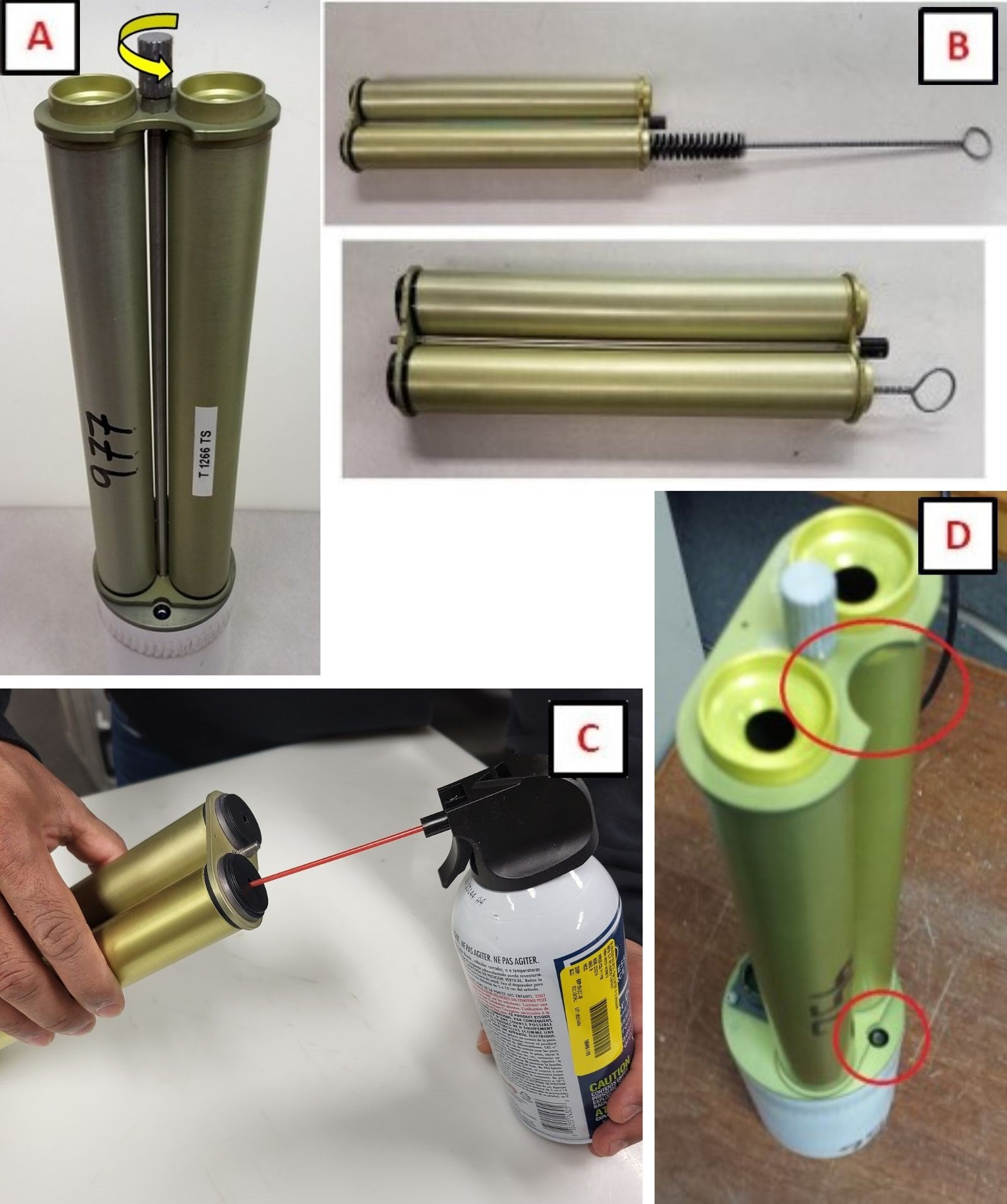
Extended Model 5 and Model T: 1. Remove collimator and check inside for webs or other obstructions. 2. Ensure collimator is installed in the correct orientation.
Solution Level 2 (more involved) Model 4 and Standard Model 5: n/a
Extended Model 5 and Model T: 1. Inspect the lenses for significant contamination or residue. If found, do not clean. Take a picture and send to AERONET.
Solution Level 3 (last resort) Model 4 and Standard Model 5: n/a
Extended Model 5 and Model T: 1. Confirm that the gains have not been changed (ask AERONET). 2. Return instrument for maintenance.